
BlogFind out the latest news about Ketian and our industry
2026-03-16
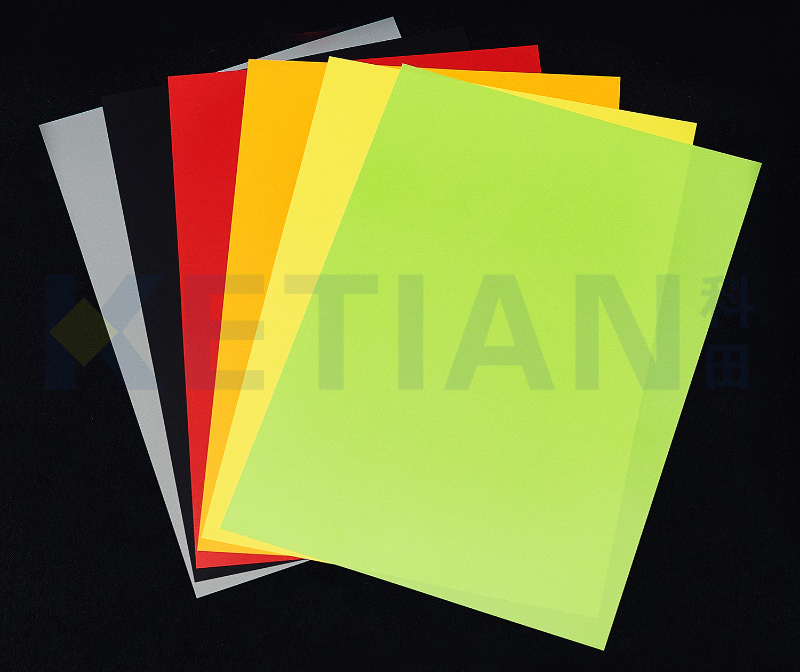
PVC card material is widely used because of its durability, flexibility, excellent printability, and cost-effectiveness. Compared with traditional paper cards, PVC cards are waterproof, resistant to wear, and capable of maintaining high-quality printing for years.
This article provides a comprehensive overview of PVC card material, including its properties, structure, manufacturing process, and applications in modern card production.
What Is PVC Card Material?
PVC card material refers to plastic sheets made primarily from polyvinyl chloride (PVC) resin, which is processed with additives such as stabilizers and modifiers to improve performance.
These sheets are commonly used to manufacture plastic cards such as:
ID cards
bank cards
membership cards
transportation cards
access control cards
loyalty cards
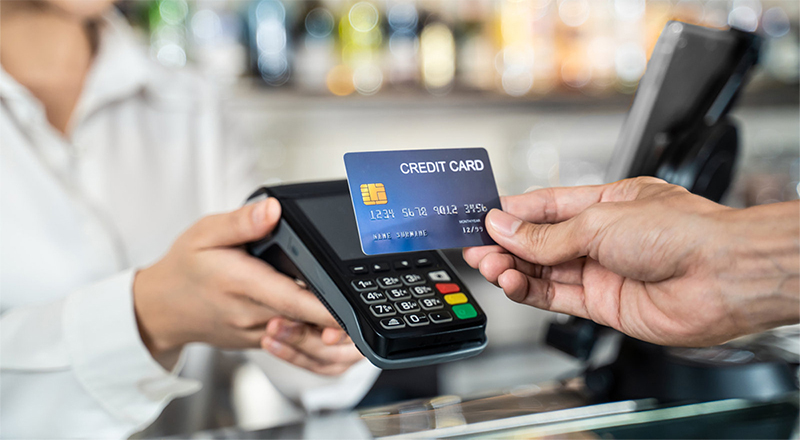
PVC is one of the most widely used plastics in the world and provides an ideal balance between flexibility, durability, and printability.
Structure of PVC Card Material
Professional PVC cards are not usually made from a single plastic sheet. Instead, they use a multi-layer structure.
1. PVC Core Layer
The core layer is the main structural component of the card.
This layer typically contains:
cardholder information
photos
numbers
printed graphics
2. Printed PVC Layer
This layer contains the visible design and branding elements.
High-resolution printing methods such as offset printing or digital printing are often used.
3. Transparent PVC Overlay
A transparent protective film is laminated on both sides of the card.
The overlay provides protection against:
scratches
UV damage
fading
surface wear
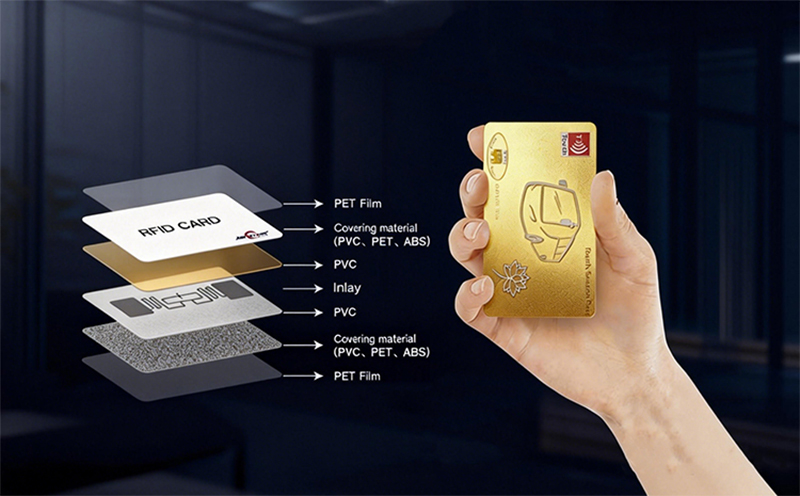
This multi-layer structure ensures long-term durability and print stability.
Key Properties of PVC Card Material
PVC has several characteristics that make it suitable for card production.
1. Excellent Durability
PVC cards are designed for daily use. They can withstand frequent bending, friction, and handling without cracking.
High-quality PVC cards can maintain structural integrity for years.
2. Waterproof and Moisture Resistant
Unlike paper cards, PVC plastic does not absorb water.
This makes PVC cards suitable for:
outdoor use
humid environments
long-term storage
3. Smooth Printing Surface
PVC sheets provide a smooth surface that allows high-resolution printing.
This ensures:
clear text
sharp logos
accurate colors
High printing precision is essential for ID cards, financial cards, and smart cards.
4. Lightweight and Flexible
PVC plastic is lightweight yet flexible.
Cards can bend slightly without breaking, making them practical for wallets and card holders.
5. Chemical Resistance
PVC material resists many acids and alkalis, helping cards maintain stability in various environments.
Types of PVC Card Materials
PVC card materials are available in several forms depending on the application.
1. Standard PVC Sheets
These are the most common materials used for plastic cards.
Features:
standard CR80 size compatibility
high printing quality
economical cost
2. Transparent PVC Sheets
Transparent PVC sheets are used for:
premium card designs
special visual effects
layered card structures
3. Colored PVC Sheets
Colored PVC sheets allow manufacturers to produce:
branded cards
security cards
custom visual effects
4. Recycled PVC Materials
To support sustainability goals, recycled PVC materials are increasingly used in card manufacturing.
These materials help reduce environmental impact while maintaining acceptable performance.
PVC Card Manufacturing Process
Producing PVC card material involves several key manufacturing steps.
1. Raw Material Preparation
PVC resin is mixed with stabilizers, modifiers, and pigments to achieve desired performance characteristics.
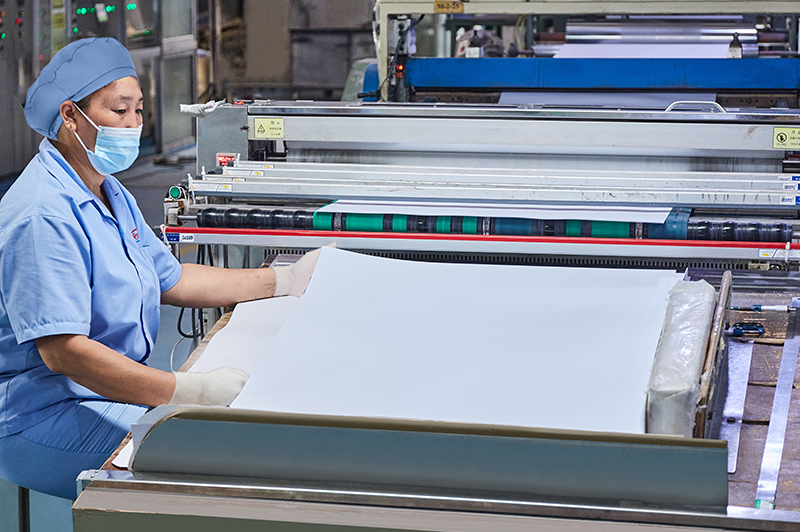
2. Sheet Extrusion
The mixture is heated and processed through extrusion equipment to produce PVC sheets of uniform thickness.
3. Calendering
Sheets are processed through rollers to achieve smooth surfaces and precise thickness control.
4. Printing
Card designs, logos, and data are printed onto PVC sheets using methods such as:
offset printing
digital printing
screen printing
UV printing
5. Lamination
Multiple PVC layers are laminated under heat and pressure.
This process bonds the layers into a single durable card structure.
6. Die Cutting
Finally, the laminated sheets are cut into standard card sizes such as CR80.
Applications of PVC Card Material
PVC card materials are used across numerous industries.
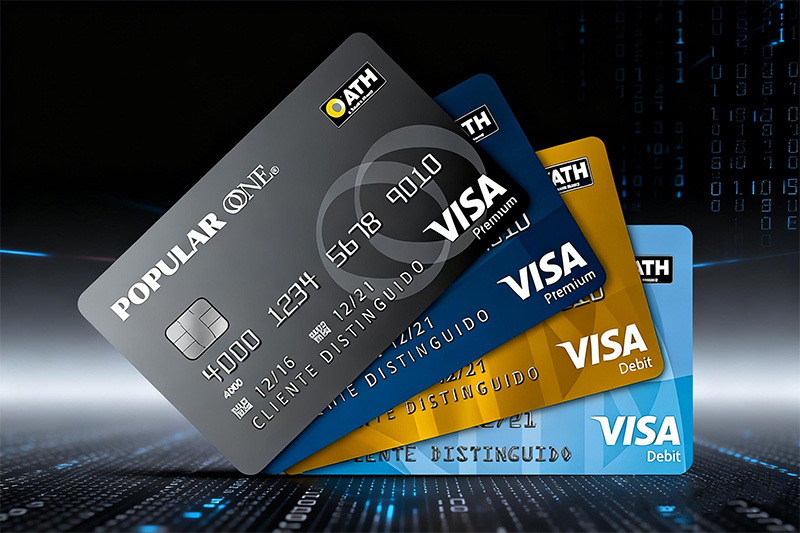
Financial Industry
PVC cards are commonly used for:
debit cards
credit cards
ATM cards
These cards often include magnetic stripes or embedded chips.
Identification Systems
PVC is widely used for ID cards such as:
employee ID cards
student cards
government IDs
Membership and Loyalty Programs
Retail businesses frequently use PVC cards for:
loyalty cards
VIP membership cards
discount cards
Transportation and Access Control
Public transportation systems and buildings often use PVC cards for access control and fare payment.
Advantages of PVC Card Material
PVC card material offers several advantages compared with other materials such as paper or laminated cards.
Cost Efficiency
PVC cards are affordable to produce in large quantities.
Long Service Life
PVC cards can last several years without significant wear.
Customization Flexibility
Manufacturers can add various features:
magnetic stripes
barcodes
QR codes
RFID chips
holographic security layers
Standardization
PVC cards follow international card size standards, making them compatible with most card printers and readers.
Limitations of PVC Card Materials
Despite its advantages, PVC also has certain limitations.
Heat Sensitivity
PVC has limited resistance to high temperatures and may deform under excessive heat.
Environmental Concerns
Traditional PVC plastics may raise environmental concerns if not properly recycled.
Because of this, many manufacturers are now exploring eco-friendly alternatives, including recycled PVC and biodegradable plastics.
Future Trends in PVC Card Materials
As sustainability becomes a global priority, the plastic card industry is evolving.
Key trends include:
recycled PVC card materials
biodegradable PVC alternatives
PVC-PET composite cards
eco-friendly card manufacturing processes
These innovations help reduce environmental impact while maintaining card durability and performance.
Conclusion
PVC card material remains the dominant material used in plastic card manufacturing worldwide. Thanks to its durability, waterproof characteristics, smooth printing surface, and low production cost, PVC continues to be the preferred solution for ID cards, bank cards, membership cards, and smart cards.
As technology evolves and sustainability becomes increasingly important, manufacturers are also developing new PVC formulations and eco-friendly alternatives to meet future market demands.
Understanding the properties and structure of PVC card materials helps businesses choose the most suitable materials for producing high-quality plastic cards.




 CN
CN

 Follow Us
 86-13823778249
  E-mail


